Prepare
Check your package, choose a private workspace, and use a trusted device.
↗A clear guide to preparation, setup, verification, and security.
Explore the setup roadmap ↓Getting started with a hardware wallet is less about speed and more about knowing what each step protects.
A Ledger device is designed to keep private keys isolated from your everyday computer or phone. Your setup should begin at an official source, continue on a device you control, and end with a recovery plan you understand. This guide walks through the choices without asking you to share secrets or rush a decision.
Keep one rule in mind: your recovery phrase is the backup to your wallet. Anyone who sees it may be able to access the assets it protects. Never type it into a website, app, message, or computer.
Setup does not require moving funds immediately. Take time to learn the app, understand how your device confirms actions, and make sure you know where to find current official help before you need it.
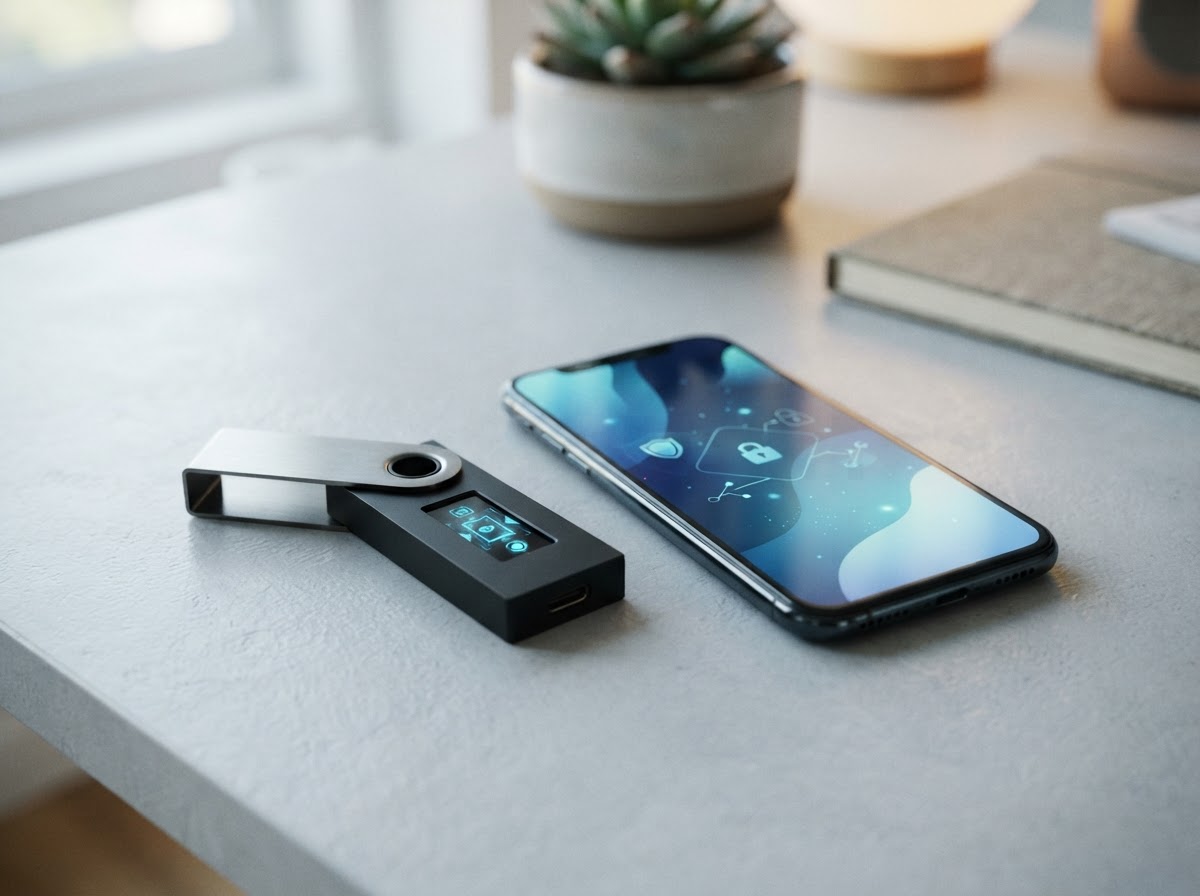
Move at your own pace. If anything feels unexpected, pause and verify rather than guessing.
Check your package, choose a private workspace, and use a trusted device.
↗Reach the official Ledger site directly and install Ledger Live from its official source.
↗Follow the device prompts. Create a new wallet or restore only when you intend to.
↗Confirm details on the hardware screen and complete any genuine app verification steps.
↗↳ Exact screens and available features vary by device, app version, and region. Follow the instructions shown by your own device.
A useful checkpoint: at each stage, ask what information is being requested and where it is being entered. Your PIN belongs on the device when prompted; your recovery phrase should remain private and offline.
A few minutes of preparation can prevent mistakes that are difficult to undo.
Buy through a source you trust. Be cautious if packaging appears tampered with or someone has supplied a pre-written recovery phrase. A legitimate setup should let you create your own phrase on the device.
Use a personal device with current software, a private network, and enough time to focus. Avoid shared computers, screen-sharing sessions, and public spaces where others can see your screen or notes.
Navigate to Ledger's official site by typing its address or using a bookmark you created yourself. Download Ledger Live only from an official Ledger channel. Do not trust links in unsolicited email, direct messages, or ads. Check the domain carefully before downloading; lookalike names and subtle spelling changes are common phishing tactics.
No legitimate support representative needs your recovery phrase. No website needs you to enter it to “synchronize,” “validate,” or unlock your wallet.
A device PIN protects local access to the hardware wallet; it is not a substitute for safeguarding the recovery phrase. Treat both with care, and never share either in a support chat. Before confirming a transaction, read the destination and amount on the device screen itself. A compromised computer can display misleading information.
See the mistake detector ↗Type the official address yourself; avoid sponsored search results and unsolicited links.
Set up alone, with your device in hand. No support agent needs your recovery phrase.
Read and approve sensitive actions on the hardware device, not just on your computer.
Write the recovery phrase offline and store it securely, separately from the device.
Your recovery phrase can restore access if your device is lost, damaged, or replaced. That makes its storage decision as important as the setup itself.
Write the words down offline exactly as the device presents them, then follow the device's confirmation procedure. Store the backup somewhere private, protected from theft, fire, and water as appropriate to your circumstances. Keep it away from the device and do not photograph, scan, email, or store it in cloud notes.
Never enter the phrase into a computer or phone to test it. If you need to restore, enter it only through the genuine hardware wallet during its own setup flow. If the phrase may have been exposed, treat the wallet as at risk and seek current guidance through official support channels—without sharing the words.
Do not make extra copies casually or label a backup in a way that reveals what it unlocks. Choose a storage approach you can reliably access while limiting who else can find it. A backup is useful only if it stays both readable to you and private from others.
These are common warning signs—not a reason to panic, but a reason to stop and check.
A request to enter it into a website, app, or chat is a major red flag. Keep it offline.
Impersonation pages can look convincing. Start from the official address you enter yourself.
Check transaction details on your hardware screen. Reject anything you cannot verify.
Pressure, secrecy, and urgent “account recovery” requests are reasons to pause and independently verify.
Before you finish setup or approve an action, check the basics.
Use official sources. Set up in private. Verify on the device. Protect your recovery phrase offline. When something does not feel right, pause before proceeding.
BACK TO THE TOP ↑